
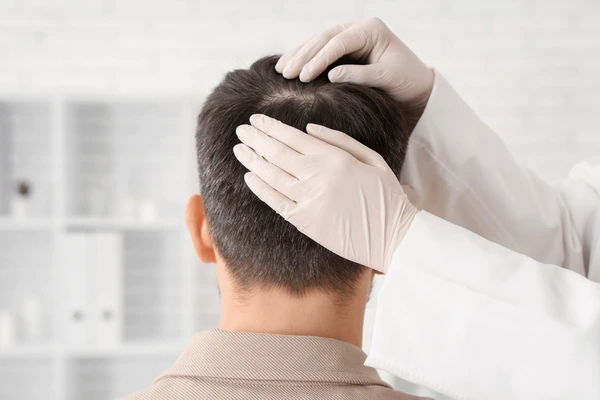
Hair loss does not follow a strict age rule. Some people notice thinning in their early twenties. Others only start seeing changes much later in life. Because of this, age often becomes one of the first concerns when people consider treatment.
Many patients in the UK ask the same question. Does being younger or older change how successful a hair transplant can be?
The answer is not as simple as a number. Age matters, but it is only one part of the bigger picture.
If you are thinking about a receding hairline hair transplant, understanding how age influences results can help you make a more informed decision.
Is There an Ideal Age for a Hair Transplant?
There is no single “perfect” age for treatment.
However, most clinics prefer to assess patients carefully before recommending surgery. This is because hair loss patterns can still change over time, especially in younger individuals.
A receding hairline hair transplant is often considered once hair loss becomes more predictable and stable.
In younger patients, hair loss may still be progressing. In older patients, the pattern is usually more established.
This difference plays a bigger role than age alone.
Hair Transplants in Younger Patients
Younger patients often notice a receding hairline early in life. This can be emotionally difficult, especially when confidence is affected.
However, surgeons usually take a cautious approach in these cases.
A receding hairline hair transplant in younger patients must be planned carefully. The main concern is future hair loss progression.
If surgery is done too early, natural hair may continue to fall out around the transplanted area. This can create an uneven appearance over time.
That is why many clinics prefer to monitor hair loss before recommending a receding hairline hair transplant for younger individuals.
Hair Transplants in Older Patients
Older patients tend to have more stable hair loss patterns.
This makes planning more predictable. Surgeons can better estimate long-term results.
A receding hairline hair transplant in older patients is often more straightforward because the final pattern of hair loss is clearer.
Donor hair quality may still vary with age, but many older patients achieve excellent results.
The key factor is not age itself, but the condition of the donor area.
Why Stability Matters More Than Age
Hair stability is one of the most important factors in transplant success.
If hair loss is still active, results may change over time.
A receding hairline hair transplant works best when the pattern of loss has slowed down or stabilised.
This allows surgeons to design a hairline that remains natural as the patient ages.
Stability helps ensure that transplanted hair blends well with existing hair in the long term.
Donor Hair Quality and Age
Donor hair plays a major role in success.
This is the hair taken from the back and sides of the scalp.
In a receding hairline hair transplant, these follicles are moved to thinning areas.
Younger patients usually have stronger donor density, but their future hair loss patterns may be less predictable.
Older patients may have slightly reduced density, but more stable patterns.
The quality of donor hair is often more important than chronological age.
How Age Affects Healing
Healing speed can vary with age, but the difference is usually not extreme.
Younger patients may heal slightly faster due to better skin elasticity and circulation.
Older patients may take a bit longer, but still achieve full recovery.
After a receding hairline hair transplant, both age groups typically follow similar recovery stages.
Swelling, scabbing, shedding, and regrowth happen in the same biological sequence.
The body’s ability to heal remains strong at most adult ages.
Hair Growth Cycles Remain the Same
Regardless of age, hair growth follows the same natural cycle.
Hair goes through growth, rest, and shedding phases.
A receding hairline hair transplant simply resets this cycle for transplanted follicles.
Once implanted, the follicles behave the same way regardless of whether the patient is 25 or 55.
This is why results depend more on biology than age alone.
Realistic Expectations at Different Ages
Expectations play a major role in satisfaction.
Younger patients often expect rapid or dramatic changes. Older patients may focus more on subtle improvement and natural appearance.
A receding hairline hair transplant should always aim for balance rather than extreme transformation.
Surgeons design hairlines based on facial structure and future ageing.
This ensures results remain natural over time, regardless of age group.
The Importance of Long-Term Planning
Hair loss is not a one-time event. It often continues over time.
This is why long-term planning is essential for all patients.
A receding hairline hair transplant should be designed with future hair loss in mind.
Surgeons must consider how the hairline will look in 10, 20, or even 30 years.
Age helps guide this planning, but it is not the only factor.
Emotional Impact of Hair Loss at Different Ages
Hair loss affects people differently depending on life stage.
Younger patients may feel more self-conscious in social or professional settings.
Older patients may feel more concerned about ageing appearance.
A receding hairline hair transplant can help improve confidence at any age.
The emotional benefit is often just as important as the physical result.
When Age Becomes a Limiting Factor
In most cases, age alone does not prevent a transplant.
However, very advanced age or poor donor health can limit options.
A receding hairline hair transplant requires healthy follicles for successful results.
If donor hair is weak, alternative treatments may be recommended instead.
A proper consultation helps determine suitability regardless of age.
What Clinics Look for During Consultation
During assessment, surgeons focus on several key factors.
These include hair loss pattern, donor density, scalp health, and medical history.
A receding hairline hair transplant is only recommended when conditions are suitable for long-term success.
Age is considered, but it is never the only deciding factor.
Each patient is assessed individually to ensure realistic outcomes.
Reading Reviews Helps Set Expectations
Understanding real patient experiences can be helpful.
Many people read receding hairline hair transplant reviews before making decisions.
These reviews often show how different age groups experience similar stages of recovery and growth.
They also highlight how results develop over time, regardless of age.
This helps patients feel more confident about their decision.
Final Thoughts
Age does influence hair transplant planning, but it does not define success on its own.
The most important factors are hair stability, donor quality, and proper surgical planning.
A receding hairline hair transplant can be successful at many stages of life when done for the right reasons and at the right time.
Younger patients need careful planning to avoid future imbalance. Older patients often benefit from more predictable patterns.
Reading real receding hairline hair transplant reviews can also help you understand how results vary across different ages.
In the end, success depends less on how old you are and more on how well the treatment is planned and executed for your individual hair loss pattern.